The energy world is in transition: with the massive expansion of large photovoltaic and storage systems, the requirements for grid security, controllability and system integration are increasing. Today, EPC service providers have to reconcile technical stability, standard-compliant implementation and economic efficiency – and need solutions that seamlessly combine protection technology, control and energy management.
The increasing expansion of capacity in the renewable energy sector is leading to more complex project architectures. Plants consist of a large number of components that need to communicate reliably with each other in order to meet grid requirements and ensure stable energy flows. Modular systems, open interfaces and certified safety technology are becoming crucial components for successful EPC projects.
Professionalization in the EPC market: new requirements, new solutions
As PV and storage systems grow in size, expectations of standardization, system integration and installation reliability increase. EPCs require preconfigured, ready-to-connect systems that simplify planning processes and reduce project risks.
Central requirements:
- Fast, error-free installation
- Guaranteed standard and grid conformity
- Flexible scalability
- Simple integration into existing architectures
Modular connection and protection systems help to reduce this complexity and at the same time shorten project lead times.
Conformity to standards as the basis for every safe feed-in
The most important technical requirements include the VDE application rules for different voltage levels (VDE-AR-N 4105, 4110, 4120, 4130). In conjunction with EU Regulation (EU) 2016/631, these define the requirements for protection technology, communication and control.
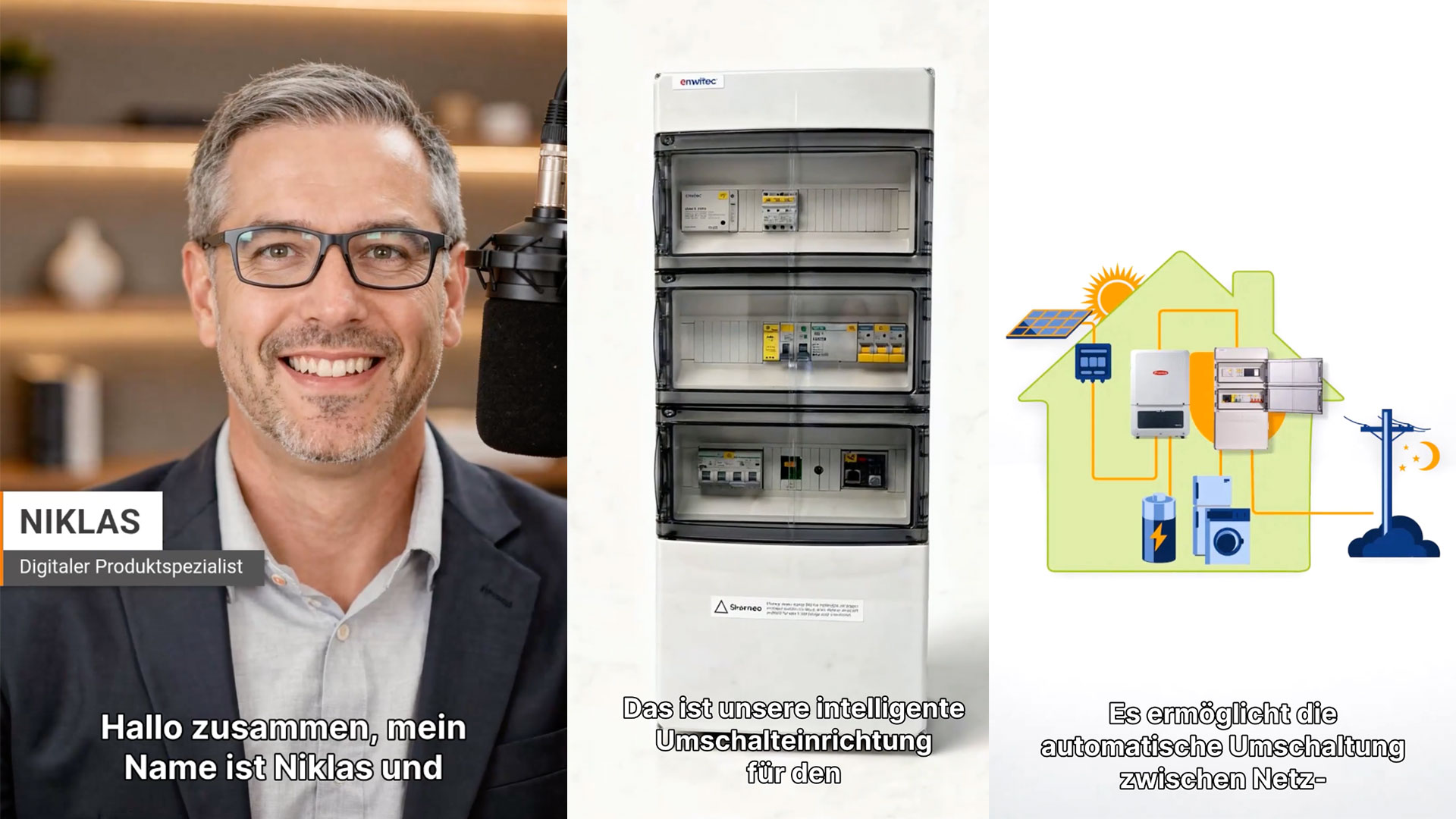
Certified systems that integrate protective relays, UPS technology, communication modules and regulatory requirements make it easier for EPCs to plan and enable grid operators to safely and verifiably accept the systems.
Another aspect is compliance with regionally differing grid operator conditions (TABs). System solutions with a high degree of configuration offer the necessary flexibility here.
Grid decoupling: The safety anchor of modern energy systems
Grid decoupling systems ensure that faults or instabilities in the system are not transferred to the public grid. They enable safe stand-alone operation and form the basis of a stable and grid-compliant feed-in.
Modular decoupling systems offer:
- Project-specific configuration of the protective relays
- Validation and testing of all safety-relevant functions
- Long-term operational reliability thanks to robust hardware
This makes them an indispensable component of large PV and storage systems.
Grid-compatible control: control and communication via EZA controller
Generation plant controllers (EZA controllers) control active power, reactive power and other grid-related specifications. Modern systems communicate via open interfaces such as:
- Modbus TCP
- Sunspec
- IEC 60870-5-104
This interoperability enables EPCs to efficiently network heterogeneous systems and implement future requirements such as dynamic feed-in or grid support.
Intelligent energy management as a control center
Energy management systems (EMS) are becoming the central authority in PV and storage projects. They coordinate generation, storage, loads and additional systems such as charging infrastructure or heat pumps.
A modern EMS offers:
- Real-time control of energy flows
- Optimization according to economic and grid-related criteria
- High compatibility thanks to open protocols such as Modbus, Sunspec or MQTT
- Scalability for microgrid, hybrid or utility applications
This makes energy management the key to efficiency, safety and sustainability.
Retrofit: Making existing systems future-proof
Many older PV systems are no longer eligible for EEG subsidies and need to be technically modernized. Retrofit systems enable a quick, standard-compliant update – without the need for a completely new installation.
Advantages:
- Adoption of current VDE functions
- Integration into modern energy management
- Significant extension of the system service life
- Economically efficient modernization strategy
Microgrids and decentralized energy supply: A look into the future
Decentralized supply structures are also becoming increasingly important worldwide. Microgrids combine PV, storage, charging systems and local consumers to create autonomous energy systems. They increase energy efficiency and enhance security of supply.
This requires systems that:
- can be flexibly coupled and decoupled
- Work in compliance with standards
- remain scalable
- Enable open communication channels
Microgrids thus open up new opportunities for EPC service providers to realize innovative energy projects.
Conclusion
Grid conformity, safety and intelligent energy management have become key success factors in EPC projects. Modular, certified solutions with open interfaces form the basis for stable and future-proof PV and storage systems. Those who combine protection technology, control and energy management into an integrated system architecture are optimally prepared for the requirements of a decentralized energy future.
👉 You can find all the details at: https://www.enwitec.eu